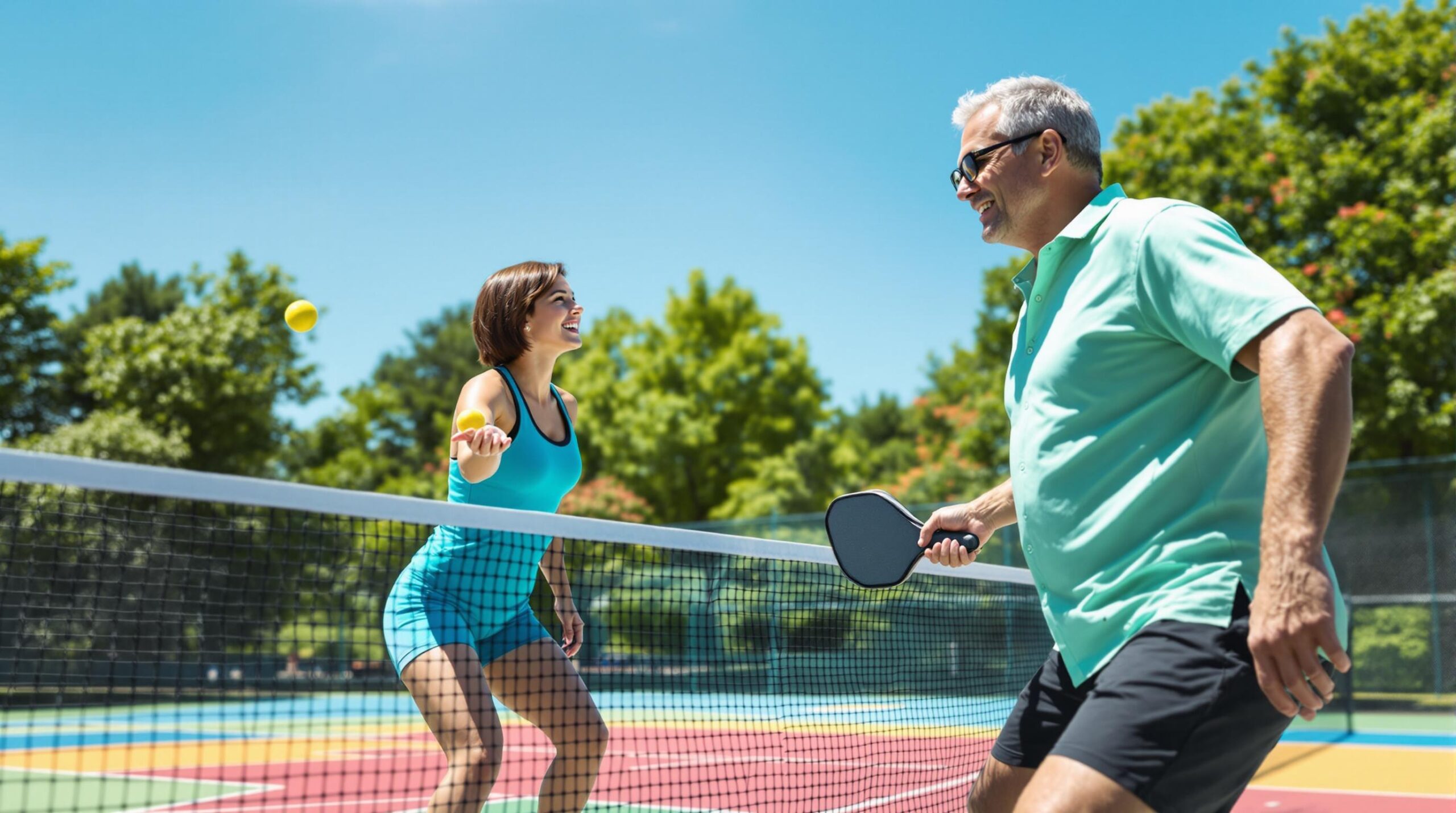
Pickleball is growing rapidly in popularity, and for beginners, mastering the basics is key to enjoying the game. Here’s a quick guide to get started:
Getting a handle on pickleball’s basic rules is crucial for building your confidence and improving your skills. Once you’ve got these down, you’ll be well on your way to enjoying the game.
Serving Basics: Serves must be underhand, hit below the waist, with the server positioned behind the baseline. The ball needs to land diagonally in the opponent’s service area. Also, keep in mind the two-bounce rule: the ball must bounce once on each side after the serve before volleys can start. This encourages controlled and strategic play.
"Don’t try and do too much with the ball. I always preach placement over power. If you hit the ball in the right place, that puts a lot of stress on your opponent." – Dale Zwack, Wilson’s Senior Racquet Engineer and professional pickleball player
Sportsmanship is just as important as skill in pickleball. Greet your fellow players before matches and acknowledge their good plays during the game. This not only fosters a positive atmosphere but also helps you grow as a player.
To improve, focus on controlled movements and accurate shot placement. Building consistency in your game starts here. Once you’ve nailed these basics, it’s time to think about getting the right gear to elevate your performance.
Getting the right equipment can make a big difference in your pickleball experience. Here’s what you need to know to start off on the right foot.
A lightweight paddle (7–8 oz) made from composite or graphite is a great choice. These materials strike a balance between power and control while minimizing arm fatigue. You can find solid options in the $50–100 price range.
When it comes to balls, go for USAPA-approved ones that match your playing environment. Indoor balls are smoother and have smaller holes, while outdoor balls are sturdier with larger holes to handle windy conditions.
Footwear matters, too. Choose court shoes with non-marking soles and good lateral support. Avoid running shoes, as they lack the stability needed for quick movements. Proper shoes not only improve your game but also help prevent injuries.
Lastly, make it a habit to replace worn-out gear. Fresh equipment keeps your performance sharp and ensures your safety on the court.
Once you’re equipped, it’s time to learn how to position yourself effectively during play.
In pickleball, the Kitchen line (non-volley zone line) is where strategy truly comes into play. This spot allows for sharper angles and better control during the game. However, getting there from the baseline takes patience and a solid plan.
One key technique to master is the third shot drop. This soft, controlled shot helps neutralize your opponents and creates opportunities for you to move closer to the Kitchen line and take the offensive.
"Proper court positioning can have a large impact on who wins points, especially in doubles play." – Athena Trouillot, professional coach
In doubles, protecting the middle of the court is crucial since it’s often an easy target for opponents. Work closely with your partner to cover the court effectively. For example, if the ball is hit toward the right, the player on that side should move toward the sideline while their partner shifts to cover the middle. This dynamic positioning ensures fewer gaps for your opponents to exploit.
Stay focused on the ball’s movement and adjust your position accordingly. Being alert and mobile helps you cover more ground and limits your opponents’ opportunities to attack effectively.
For beginners, learning proper positioning early on is a game-changer. Drills like the follow-the-ball exercise can help improve your court awareness and movement.
Equally important is communication with your partner. Use clear verbal cues to decide who will take each shot. This avoids confusion and ensures your team maintains solid court coverage.
Now that you know how to position yourself effectively, it’s time to dive into mastering shot control to keep your advantage during the game.
When you’re starting out, focusing on control is more important than chasing power. Controlled shots help minimize mistakes and build consistency – essential skills for improving your pickleball game.
Keep your paddle movements compact and intentional to avoid wild shots. A steady wrist helps ensure consistent ball contact, and targeting specific areas of the court gives you a tactical edge. Begin with slower, precise shots and gradually increase speed as you gain confidence.
To develop control, pay attention to these three areas:
One great practice drill is dinking with a partner. Hit soft, controlled shots just over the net. This helps refine your touch, improve placement, and teaches patience by resisting the urge to hit too hard. Over time, better control will naturally lead to improved confidence and smarter shot choices.
A dink shot is a soft, controlled hit that lands in your opponent’s non-volley zone (commonly called the "kitchen"). It’s a smart way to maintain positioning and create chances to score.
To execute a good dink shot, stand close to the non-volley line, hold the paddle with a light grip, and use smooth, controlled movements. Angle your paddle slightly upward to guide the ball gently into the kitchen. The key is to keep the ball low and just over the net – this makes it tough for your opponents to launch an aggressive return.
Here’s how to practice dinking effectively:
Dinking isn’t just about keeping the ball in play; it’s a tactical move to control the pace and set up winning shots. As you refine this skill, you’ll feel more in control during critical moments of the game.
With consistent practice and attention to technique, the dink shot becomes a powerful tool in your pickleball arsenal. It’s a stepping stone to mastering advanced skills and boosting your confidence on the court.
Trying to perfect multiple shots at once can be overwhelming, especially for beginners. Instead, focus on one shot at a time to build a solid base. Start with basics like the forehand or backhand.
To break each shot into manageable steps, concentrate on these key elements:
Here’s how to improve each shot effectively:
Be patient – this process may take weeks of focused effort. Along the way, pay close attention to your court positioning. Where you stand and how you move relative to the ball are crucial for executing shots effectively. Developing this awareness will also improve your shot selection and strategic thinking.
Don’t forget the importance of tracking the ball’s movement. This helps you prepare for each shot with better timing and placement, making your practice even more productive.
Once you’re confident in individual shots, shift your focus to maintaining a steady wrist. This will help you achieve more consistent results as you continue to improve.
Keeping your wrist steady is crucial for hitting accurate and consistent shots in pickleball. If you flick your wrist, your shots can become unpredictable and lead to errors. Think of your wrist as a stable foundation for your paddle – not the source of your power.
Instead, focus on generating power through your arm and shoulder while keeping your wrist firm. This approach not only improves shot control but also helps maintain consistent paddle angles, working hand-in-hand with other skills like positioning and shot precision.
Here are a few tips to develop steady wrist control:
To practice, start with soft dinks, focusing on keeping your wrist stable. Gradually increase the power of your shots while maintaining that steadiness. You’ll notice improved accuracy and better shot placement. Stay relaxed but firm – gripping too tightly or tensing up can lead to fatigue and less control.
Building this wrist stability is a key step toward mastering controlled, consistent shots. It will also make the drills and warm-ups in the next section much easier to execute effectively.
Start every session with light cardio and dynamic stretches, focusing on your shoulders, arms, legs, and especially your wrists. A proper warm-up combined with focused drills lays the foundation for consistent gameplay and boosts your confidence on the court.
To sharpen your skills, incorporate these drills into your routine:
Set clear goals for each practice session to measure your progress. Practicing with a variety of partners exposes you to different playing styles, enhancing your understanding of the game and your ability to adapt.
When practicing, keep these tips in mind:
Partner drills are especially helpful for improving court awareness and communication. Working with different partners not only builds teamwork but also prepares you to handle various game scenarios. These drills enhance both individual skills and the coordination needed for effective collaboration on the court.
Good communication is key to staying in sync, anticipating plays, and creating winning strategies. Simple verbal cues like "Mine" or "Yours" help clarify who takes the shot, while "Switch" signals a position change. Terms like "Short" or "Deep" describe the shot’s direction, and "Out" warns about balls landing outside the court.
Non-verbal signals, like hand gestures or paddle positioning, can also share information without disrupting play. For instance, holding your paddle up behind your back can indicate readiness for a more aggressive move.
How communication changes during the game:
Hesitating to communicate can lead to confusion and missed opportunities. To improve, try these tips during practice:
Make communication practice part of your regular training. It helps avoid errors and strengthens teamwork, even when things don’t go as planned.
Mistakes are a natural part of learning pickleball. Instead of getting discouraged, view them as chances to grow. Keeping a positive mindset not only helps you improve but also fosters a more enjoyable atmosphere on the court for everyone involved.
Here are a few areas where beginners often struggle and how you can work on them:
Use mistakes as a way to refine your skills. Here’s a quick guide:
| Mistake Type | Strategy | Key Action |
|---|---|---|
| Technical Errors | Focused Practice | Work on one skill at a time |
| Positioning Issues | Court Awareness | Practice better court coverage |
| Communication Gaps | Partner Feedback | Talk and debrief after matches |
Mistakes can be frustrating, but how you handle them matters. Try these tips:
The key is to stay objective. After each match, review your performance and pinpoint areas to improve. Then, create a plan to work on those weaknesses. This approach turns mistakes into valuable lessons and helps you progress as a player.
Becoming skilled at pickleball requires dedication, patience, and a strong focus on the fundamentals. Moving from a beginner to a confident player is much easier when you stick to the basics and keep a positive attitude.
As Zwack points out, emphasizing placement over power often yields better results. This strategy highlights an important aspect of pickleball and lays the groundwork for success.
Here are three key areas to focus on as you grow as a player:
| Focus Area | Strategy | Expected Outcome |
|---|---|---|
| Technical Skills | Concentrate on one shot at a time | Improve consistency |
| Mental Approach | Treat mistakes as learning opportunities | Build confidence |
| Sportsmanship | Show respect to all players | Strengthen camaraderie |
With the pickleball community expanding quickly, focusing on essentials like shot control, clear communication, and proper positioning will set you up for long-term growth. Prioritize controlled, deliberate play instead of rushing into advanced techniques.
As mentioned earlier, good sportsmanship is a cornerstone of pickleball. It not only enhances your experience but also contributes to the friendly, welcoming environment that makes the sport so enjoyable.
Each game offers a chance to improve your skills, connect with others, and have fun. Armed with these insights, you’re ready to hit the court with confidence and fully enjoy what pickleball has to offer.
Picking the right paddle as a beginner is key to improving your skills and enjoying the game. The right paddle not only helps you play better but also sets you up for learning proper techniques.
For beginners, a midweight paddle (7.3-8.5 ounces) is a great choice. It offers a mix of control and power, making it easier to handle. Lightweight paddles (under 7.3 oz) are easier to maneuver but may lack power, while heavy paddles (8.5+ oz) provide stronger hits but can tire your arm faster.
Here’s a quick breakdown of paddle options:
| Weight Class | Weight Range | Best For | Benefits |
|---|---|---|---|
| Lightweight | 7.3 oz or less | Players who value control | Easier to move, reduces arm strain |
| Midweight | 7.3-8.5 oz | Beginners | Balanced feel for both power and control |
| Heavy | 8.5+ oz | Power-focused players | Stronger shots, more stability |
When choosing your first paddle, look for a composite option with a grip size that fits your hand comfortably. A proper grip ensures better control – your thumb should wrap around the handle without overlapping your fingers.
Brands like Paddletek and Selkirk offer reliable beginner paddles in the $50-$100 range. If possible, borrow paddles from other players or try demo options at a pickleball club to see what feels best for you.
Starting with the right paddle makes it easier to focus on learning the game and having fun.