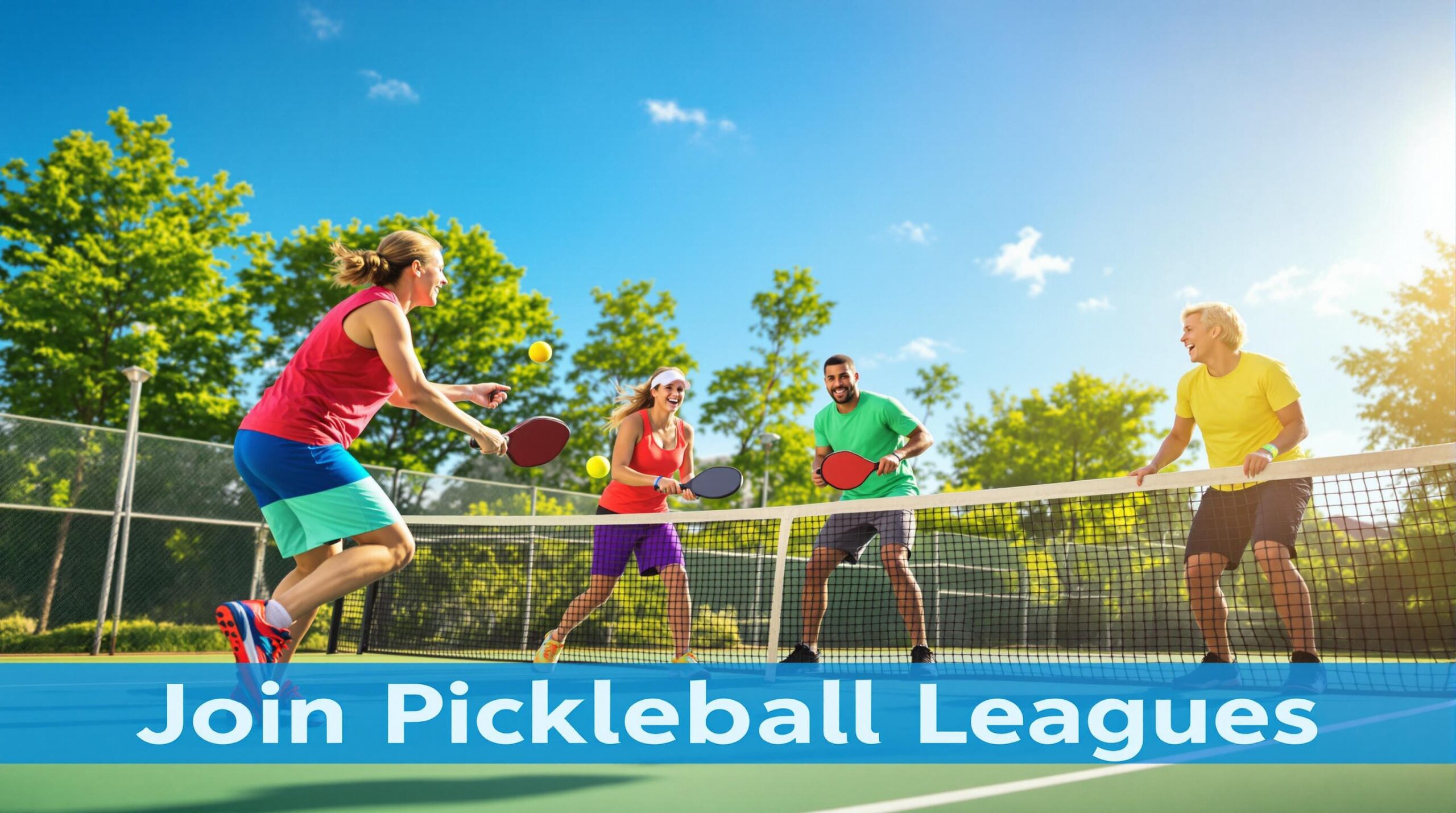
Pickleball leagues are organized groups where players of all skill levels participate in structured matches. They offer a chance to compete, improve skills, and connect with others. Here’s what you need to know:
Leagues are about more than just competition – they’re a way to grow, have fun, and build lasting friendships. Ready to join? Let’s dive in!
Getting involved in a pickleball league is simple, with plenty of options available for players at any skill level.
Local community centers, recreation departments, and platforms like Paddle Party offer leagues with schedules and divisions tailored to different skill levels.
Here are some factors to keep in mind when choosing a league:
| Factor | What to Look For |
|---|---|
| Skill Levels | Beginner, Lower Intermediate, Upper Intermediate, Advanced |
| Format | Singles, doubles, or mixed doubles |
| Schedule | Fixed or flexible match times |
"Compete, connect, and have fun while climbing the ranks in your skill division!"
Signing up usually involves a skill assessment, paying a fee, and reviewing the league’s rules, formats, and deadlines. Many leagues use the pickleball rating system (3.0, 3.5, 4.0) to ensure evenly matched games and a balanced competition.
Leagues often offer features like:
Once you’re signed up, getting familiar with the rules and formats will help you enjoy the league to the fullest.
Pickleball leagues follow the official USA Pickleball 2024 rulebook, which emphasizes self-officiated matches. Players are responsible for calling their own faults and resolving disputes directly on the court. Matches are played to 11 points, requiring a 2-point lead to win, with a 15-point cap to keep games efficient.
Here are some key rules for league play:
| Rule Type | Description |
|---|---|
| Scoring System | Only the serving team can score points |
| Match Format | Best of 5 games or until the time limit |
| Player Rotation | Permitted only between games |
| Substitutions | Not allowed during playoff matches |
"A fault is any action that stops play because of a rule violation." – USA Pickleball Rules
Disputes that can’t be resolved by players are handled by site managers to maintain fairness. Additionally, players must announce the score before each serve, using three numbers in doubles play: the serving team’s score, the receiving team’s score, and the server number. These rules help ensure smooth gameplay while fostering respect and sportsmanship.
Pickleball leagues offer several formats to suit different preferences:
Tiebreakers are determined by factors like head-to-head results, point differentials, and total points scored.
While understanding the rules and formats is important, playing in the right division for your skill level ensures a better experience.
Skill levels are the backbone of fair competition in pickleball leagues, ensuring players face others with similar abilities.
Players are grouped into skill levels based on self-ratings or DUPR, a system that tracks match performance to place players objectively.
Most leagues organize players into three main categories:
| Skill Level | Description | Typical Characteristics |
|---|---|---|
| Beginner (2.0-2.5) | Just starting out | Learning basic shots and rules |
| Intermediate (3.0-3.5) | Consistent play | Gaining control over shots and strategy |
| Advanced (4.0+) | Competitive matches | Mastering court positioning and shot selection |
Knowing where you stand is important, but how do you move up the ranks?
DUPR scores are updated after matches, helping identify players who consistently perform above their current level.
Several factors determine level changes:
If a player feels their skill level isn’t accurate, they can appeal. Leagues often require proof, like recent match results or performance records, to review such requests.
Want to improve? Regular practice and teaming up with more experienced players can help you level up.
Excelling in pickleball leagues requires focused practice, smart partnerships, and solid preparation. Let’s dive into some effective methods to boost your game.
Building strong partnerships starts with structured practice that emphasizes teamwork, communication, and skill-building. Here’s a breakdown to make your practice sessions count:
| Practice Focus | Time Allocation | Key Elements |
|---|---|---|
| Fundamental Drills | 20 minutes | Dinking, resets, drops |
| Partner Communication | 15 minutes | Shot calling, positioning |
| Match Simulation | 25 minutes | Strategy implementation |
"To excel in pickleball, you need a combination of skills, including serving accuracy, strong footwork, effective shot selection, and strategic thinking." – 101 Pickleball
Aim to practice 2-3 times a week for 45-60 minutes. Short, focused sessions are often more productive than longer, scattered ones.
Staying mentally and physically ready is just as important as skill training. Create a pre-game routine to keep yourself calm and focused.
For physical readiness:
To stay mentally sharp during matches:
Improving your performance not only helps you succeed individually but also enhances team dynamics. A respectful and positive attitude contributes to a thriving league atmosphere, making the experience more rewarding for everyone involved.
Good sportsmanship is key to making league play enjoyable for everyone. Clear communication and honest gameplay are the cornerstones of fair play. For example, when calling scores, make sure to speak loudly and clearly to avoid confusion. If a disagreement happens, stay calm and work together to resolve it.
"Understanding and practicing proper pickleball etiquette is important to creating a positive experience for everyone involved." – The Picklr
Small actions, like tapping paddles before and after games, show respect and set the tone for sportsmanship. Calling scores clearly, staying quiet during points, and recognizing great shots are simple ways to create a welcoming and enjoyable atmosphere.
| Behavior | Purpose | Impact |
|---|---|---|
| Clear Score Calling | Avoids disagreements | Keeps the game moving |
| Staying Quiet During Points | Minimizes distractions | Helps players focus |
| Acknowledging Good Shots | Shows respect | Builds camaraderie |
| Giving Benefit of Doubt | Encourages fairness | Reduces unnecessary tension |
When you prioritize respect on the court, you help build a stronger and more connected pickleball community.
Showing up 15-20 minutes early is a great way to warm up and chat with other players. Leagues also provide opportunities to strengthen relationships beyond the court:
Leagues are about more than just the game – they’re a chance to build lasting connections.
Pickleball leagues are a great way to improve your skills while connecting with others who share your passion. According to the USA Pickleball Association, these leagues help players grow both competitively and socially.
To get the most out of your league experience, focus on both personal growth and having fun. Instead of stressing over wins, aim for achievable goals – like perfecting your serve or stepping up to the next skill level.
Here are some tips to make the most of your time in a league:
The best players know how to combine healthy competition with building friendships. Leagues offer the structure and community to help you reach your pickleball goals while enjoying every step of the journey.